By Sara Gena Israel, APRN, PMHNP-BC
What we eat shapes more than our bodies. It also shapes our mood, our energy, and how clearly we think. The food on your plate helps fuel the brain that carries you through your day.
This post begins a series exploring the five elements of the Balanced Mind Framework™: nourishment, movement, restorative sleep, emotional regulation, and mental clarity. We start with nourishment because food is one of the most basic and steady ways we care for ourselves. It happens many times a day, and small choices can add up over time.
Why Nourishment Matters for Mental Health
The brain is one of the busiest organs in the body. It uses about 20 percent of the energy you take in each day, even at rest. To work well, it needs a steady supply of healthy fats, whole grains, protein, vitamins, and minerals.
Research over the past 20 years shows that nutrition affects mental health. Eating patterns rich in vegetables, fruits, whole grains, beans, fish, nuts, and olive oil are linked to lower rates of depression and anxiety. Eating patterns high in ultra-processed foods, added sugars, and white flour are linked to higher rates of mood concerns.
Three main connections help explain why:
- The gut-brain axis. Your gut and brain talk to each other all day through nerves, hormones, and immune signals. The bacteria in your gut help make many of the same chemicals involved in mood, including serotonin.
- Blood sugar steadiness. Sharp rises and crashes in blood sugar can feel like or worsen anxiety, irritability, and tiredness. Balanced meals help keep your energy and mood more even.
- Inflammation. Ongoing low-level inflammation is linked to depression and other mood concerns. Many whole foods help calm inflammation, while many ultra-processed foods can raise it.
Try this: Notice how you feel one to two hours after meals this week. Do you feel steady and clear, or tired and foggy? Your body offers helpful information.
Nutrients That Support the Brain
Several nutrients have a strong link to mental wellness. You do not need to track every bite. The goal is simply to add more of these foods to your week.
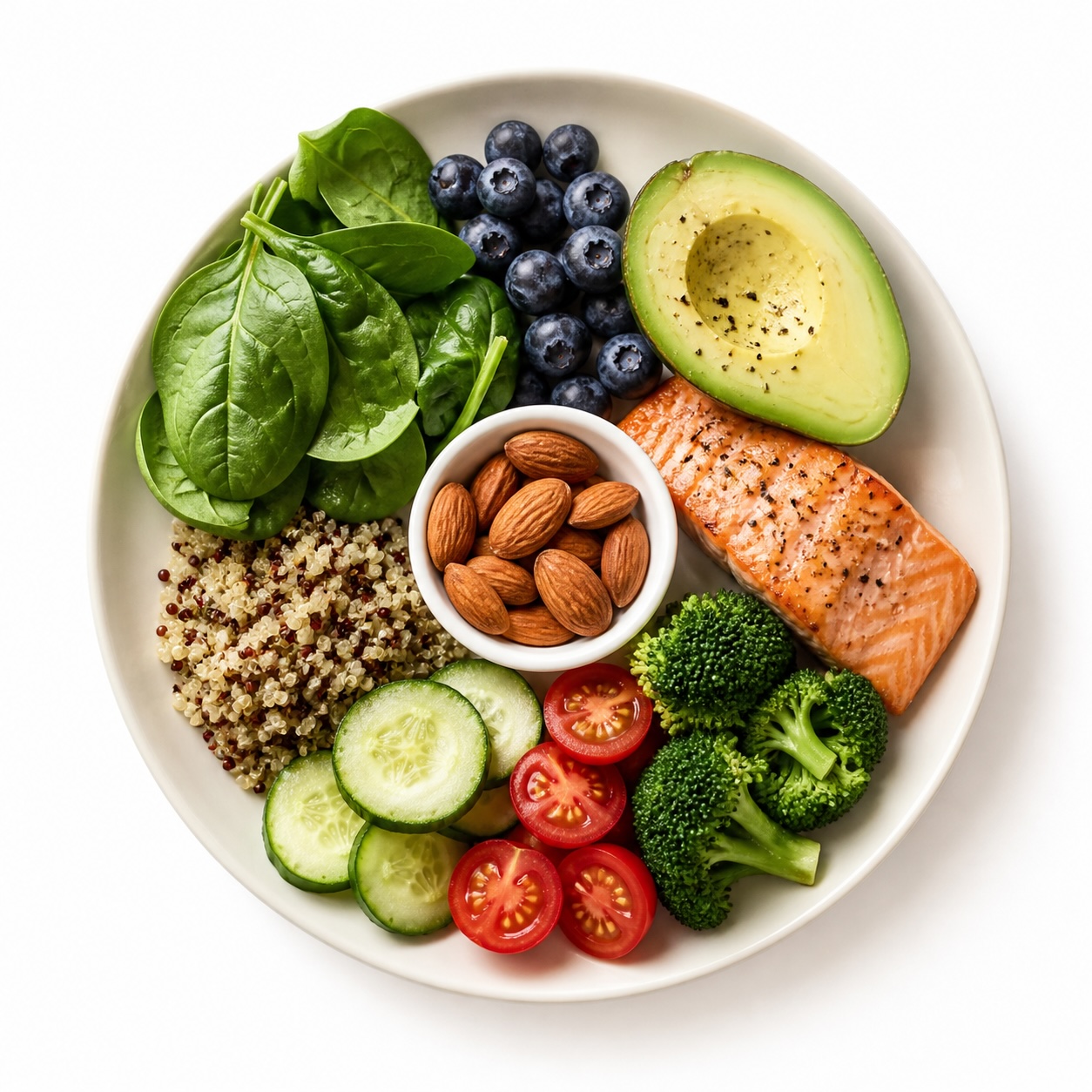
- Omega-3 fatty acids. Found in salmon, sardines, walnuts, chia, and flax. Linked to lower rates of depression.
- B vitamins, especially folate and B12. Found in leafy greens, beans, eggs, and lean meats. Important for energy and steady mood.
- Magnesium. Found in dark leafy greens, pumpkin seeds, almonds, and dark chocolate. Supports calm and sleep.
- Vitamin D. Found in fatty fish, eggs, and foods with vitamin D added. Your body also makes it from sunlight. Low levels are linked to depression.
- Fiber and fermented foods. Found in vegetables, fruits, beans, whole grains, yogurt, kefir, and sauerkraut. Support a healthy gut.
- Protein. Found in fish, eggs, poultry, beans, tofu, dairy, and nuts. Provides building blocks for brain chemicals.
Try this: Choose one nutrient group above and add it to one meal this week. Small additions are easier to keep than big overhauls.
The Balanced Mind Approach to Eating
Nourishment in the Balanced Mind Framework™ is not about strict rules, food labels, or guilt. It is about adding more of what supports you and easing up on what does not.
A few gentle tips:
- Add before you take away. Bring in colorful vegetables, fruits, and whole foods rather than focusing only on what to remove.
- Eat regularly. Long gaps between meals can leave your blood sugar, energy, and mood unsteady. Aim for meals and snacks at fairly even times.
- Pair foods for steadiness. Mix a protein, a healthy fat, and a fiber source at meals to help energy last.
- Hydrate. Even mild dehydration can affect focus and mood. Water, herbal teas, and water-rich foods all count.
- Eat with attention. When you can, sit down, slow down, and notice your food. This supports both digestion and a calmer nervous system.
Try this: Choose one meal a day to eat without your phone or other screens. Notice the taste, texture, and how your body feels.
When Food and Mood Become Tangled
For some people, food becomes a source of stress, control, or shame. If you find yourself thinking about food in ways that feel strict, hidden, or upsetting, you are not alone, and support is available. Disordered eating affects people of every age, body size, gender, and background. It is a medical concern, not a personal flaw.
Signs that may suggest a need for extra support include:
- Strong fear of certain foods or food groups
- Skipping meals or eating in secret
- Strict rules about what, when, or how much to eat
- Eating to soothe hard emotions in ways that feel out of control
- Strong worry about body shape or weight that affects daily life
If any of this feels familiar, please reach out to a trained provider. Healing is possible, and the right support makes a real difference.
Faith and the Table
Across many faith traditions, food carries meaning beyond nutrition. It is a place of gathering, gratitude, and shared memory. For those who draw strength from faith, the table can also be a place of mental rest.
A few simple practices that honor both body and spirit:
- Pause before eating. A short prayer, blessing, or moment of gratitude can turn a rushed meal into a moment of peace.
- Share when you can. Eating with others, even sometimes, supports both nutrition and connection.
- Receive your meals as care. A simple act of nourishment can be an act of self-respect and care for the body you have been given.
As Proverbs 17:22 reminds us, “A merry heart doeth good like a medicine.” A nourished body and a peaceful heart often grow together.
Small Steps This Week
You do not need a perfect plan to begin. Choose one small step:
- Add one extra serving of vegetables to one meal a day
- Drink a glass of water when you wake up
- Trade one ultra-processed snack for a whole-food option
- Eat one meal a day at the table, without screens
- Pause for a quiet moment of gratitude before eating
Steady, gentle changes tend to last longer than dramatic ones.
Balanced Mind Mental Health: Your Partner in Care and Wellness
Nourishment is the first element of the Balanced Mind Framework™ for a reason. It meets you where you already are, several times a day, and offers a steady way to care for your mental wellness from the inside out.
At Balanced Mind Mental Health, care is rooted in whole-person wellness across every season of life. If you are ready to take the next step, contact Balanced Mind Mental Health to learn more or get started.
References
- Apostolakopoulou, X. A., Petinaki, E., Kapsoritakis, A. N., & Bonotis, K. (2024). A narrative review of the association between healthy dietary patterns and depression. Cureus, 16(5), e60920.
- Bozzatello, P., Novelli, R., Montemagni, C., Rocca, P., & Bellino, S. (2024). Nutraceuticals in psychiatric disorders: A systematic review. International Journal of Molecular Sciences, 25(9), 4824.
- National Institute of Mental Health. Eating Disorders. Retrieved from https://www.nimh.nih.gov/health/topics/eating-disorders
Disclaimer: If you are experiencing a mental health crisis or thoughts of suicide or self-harm, call or text 988, call 911, or go to the nearest emergency room.
This information is for educational purposes only (regardless of date or topic), offering generalized details. It is NOT comprehensive and does not include all relevant information about conditions, treatments, medications, side effects, or risks for specific patients. It aims to aid understanding of mental health conditions or treatments, not to replace medical advice or the evaluation, diagnosis, or treatment provided by a healthcare provider tailored to an individual’s unique circumstances. Use of this website or blog content does not establish a provider-patient relationship with Balanced Mind Mental Health or its providers. Always consult a healthcare professional for a thorough evaluation, diagnosis, and treatment plan. This information does not endorse any treatment or medication as safe, effective, or approved. Balanced Mind Mental Health and its affiliates disclaim any warranty or liability associated with this information or its use.