
Mental wellness is influenced by more than medication alone. It is shaped by how we eat, move, sleep, manage stress, and connect with ourselves and others. Lifestyle Psychiatry recognizes the deep connection between mind, body, and overall health, bringing that understanding into every aspect of psychiatric care. At the center of this approach is the Balanced Mind Framework™, a structured model that highlights five key elements that support mental well-being. While mental health is affected by many aspects of life, including physical, social, and environmental factors, this framework focuses on elements that can be strengthened to support balance, resilience, and lasting well-being. Services on this page are provided by a Psychiatric Mental Health Nurse Practitioner (APRN, PMHNP-BC) within the scope of psychiatric practice, integrating principles of Lifestyle Medicine and evidence-based Lifestyle Psychiatry interventions to support whole-person health.
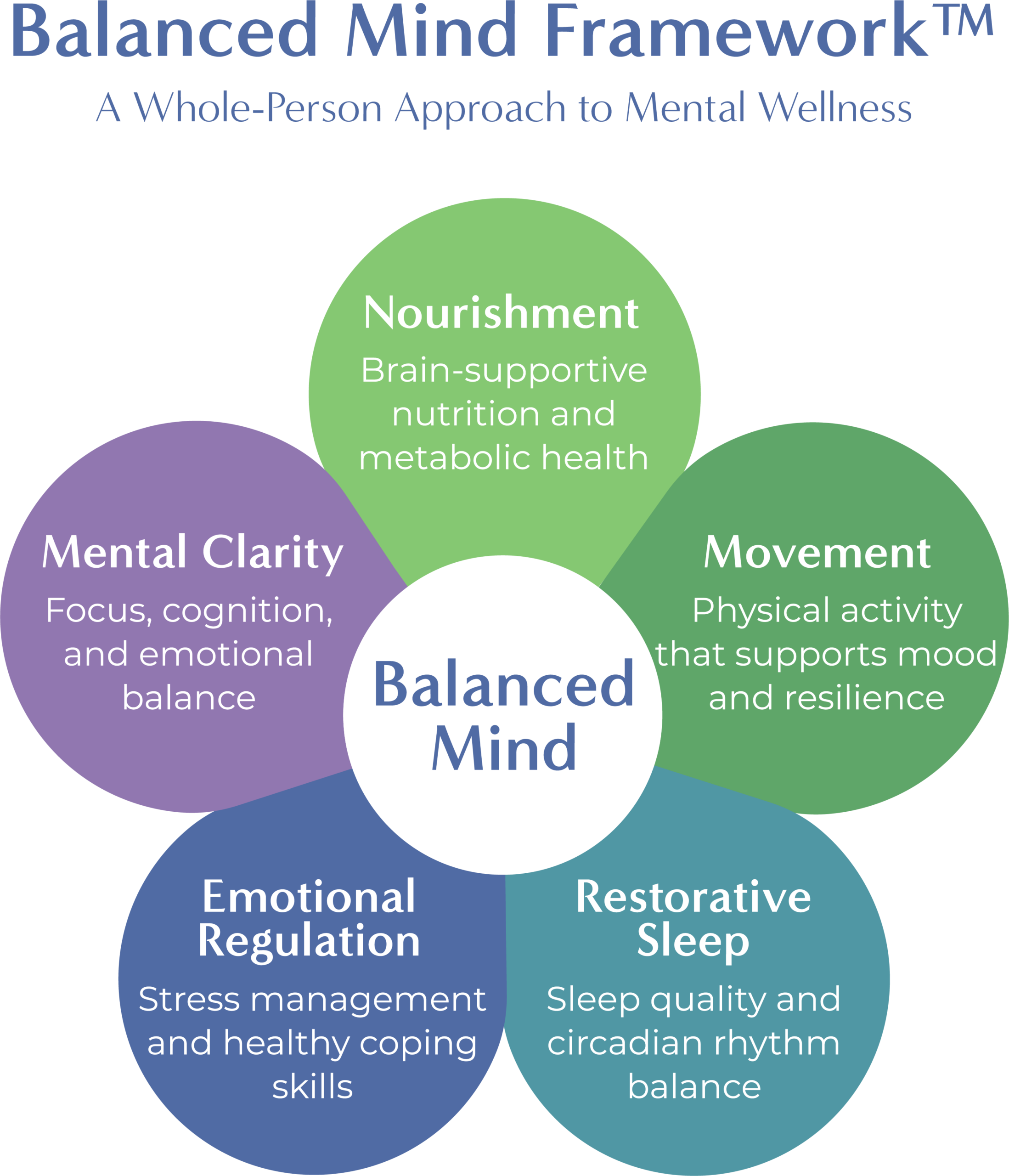

Nourishment: Brain-Supportive Nutrition and Mindful Eating
Nutrition plays an important role in mental wellness and overall health. The foods we eat can influence energy levels, blood sugar balance, inflammation, and the nutrients needed for healthy brain function. A balanced approach that includes whole, minimally processed foods such as vegetables, fruits, whole grains, legumes, nuts, seeds, and other quality protein sources supports both physical and emotional well-being. At the same time, mindful eating encourages awareness of hunger cues, eating patterns, and how daily food choices impact overall health. Focusing on consistency, nourishment, and sustainability helps support mental clarity, emotional balance, and long-term well-being.
Movement: The Power of Movement
Regular physical activity is one of the most well-supported lifestyle interventions for mental health. Movement of any kind, whether yoga, walking, strength training, or simply being more active throughout the day, can help improve mood, reduce stress, and support emotional balance. Consistent activity also helps counter the effects of prolonged sedentary behavior, which is increasingly linked to changes in mood and energy. The focus is less on a specific routine and more on finding movement that feels accessible and sustainable, supporting physical and emotional resilience over time.


Restorative Sleep: Sleep Quality and Daily Recovery
Sleep is foundational to both mental and physical health. During sleep, the brain processes emotions, consolidates memory, and supports the hormonal and neurological functions that regulate mood, attention, and stress response. When sleep is consistently insufficient or disrupted, it can affect emotional resilience, cognitive clarity, and overall daily functioning. Prioritizing sleep means more than logging enough hours. It involves understanding individual sleep patterns and building habits that support deeper, more restorative rest. A consistent sleep schedule, a calming wind-down routine, and a comfortable sleep environment are among the practical strategies explored.

Emotional Regulation: Coping, Habits, and Support
Emotional regulation plays an important role in mental wellness and overall well-being. Patterns such as stress responses, coping habits, and substance use can influence mood, behavior, and daily functioning. Reducing harmful habits often requires time, patience, and a personalized approach. At the same time, strong support systems, meaningful relationships, and social connection can help reduce stress and promote emotional stability. Through practical strategies, supportive connections, and ongoing guidance, this area of care focuses on strengthening resilience and supporting long-term emotional balance.
Mental Clarity: Focus and Stress Resilience
Mental clarity is influenced by many areas of life, including physical health, relationships, environment, and daily habits. Supporting these areas can improve focus, emotional balance, and overall well-being. Managing stress effectively is an important part of maintaining clarity, as chronic stress can impact attention, decision-making, and mood. Recognizing stress responses and developing healthy coping strategies, such as mindfulness and relaxation techniques, can support clearer thinking and improved focus. Strengthening these habits over time helps promote resilience and a more balanced state of mental well-being.
Take the next step toward improving your mental health through a balanced, whole-person approach. Lifestyle Psychiatry supports mental clarity, emotional balance, and overall well-being through practical, individualized care.
Lifestyle Psychiatry FAQ
Lifestyle Psychiatry is a whole-person approach to mental health care grounded in principles of Lifestyle Medicine. It integrates traditional psychiatric care, including evaluation and medication when appropriate, with evidence-based lifestyle interventions that address nutrition, physical activity, restorative sleep, stress management, social connection, and other factors that influence mental and overall health.
Lifestyle Psychiatry emerged from Lifestyle Medicine, the clinical discipline that examines how daily habits and behaviors affect health. A growing body of research shows that many mental health concerns, including anxiety, depression, and sleep problems, are closely connected to nutrition, movement, sleep, stress, and social connection. Lifestyle Psychiatry applies that evidence within psychiatric care, alongside traditional treatment such as evaluation and medication when appropriate.
Lifestyle Psychiatry builds on traditional psychiatric care by also considering how lifestyle factors influence mental health. In addition to psychiatric evaluation and medication management when appropriate, it incorporates evidence-based interventions related to nutrition, movement, restorative sleep, stress management, social connection, and other areas of daily life. At Balanced Mind Mental Health, this whole-person approach is guided by the Balanced Mind Framework™, which focuses on nourishment, movement, restorative sleep, emotional regulation, and mental clarity.
Lifestyle changes are powerful tools for mental wellness, but they are not always a replacement for medication. Some conditions need medication for safety and stability, and lifestyle support works alongside it. Other times, lifestyle strategies alone may be enough. Every plan is personal, made through honest conversation between you and your provider, based on what is best for your unique situation.
Lifestyle Psychiatry may be especially helpful for those facing:
- Anxiety, depression, or stress-related concerns
- ADHD and attention challenges
- Hormonal mood changes, including PMDD, postpartum, and perimenopausal mood concerns
- Sleep difficulties
- Burnout, low energy, or trouble focusing
- A desire for evidence-based, whole-person psychiatric care that goes beyond medication alone
This approach recognizes the bidirectional relationship between mental and physical health: mental health affects physical well-being, and physical health influences mood, energy, and sleep.
Care is offered to people of all genders, with a special focus on women navigating mental health needs across reproductive and hormonal transitions.