By Sara Gena Israel, APRN, PMHNP-BC
Mental health is shaped by more than just thoughts and feelings. It is also influenced by how we eat, move, sleep, and manage stress. The Balanced Mind Framework™ brings these areas together into one simple, whole-person approach to mental wellness.
What Is the Balanced Mind Framework™?
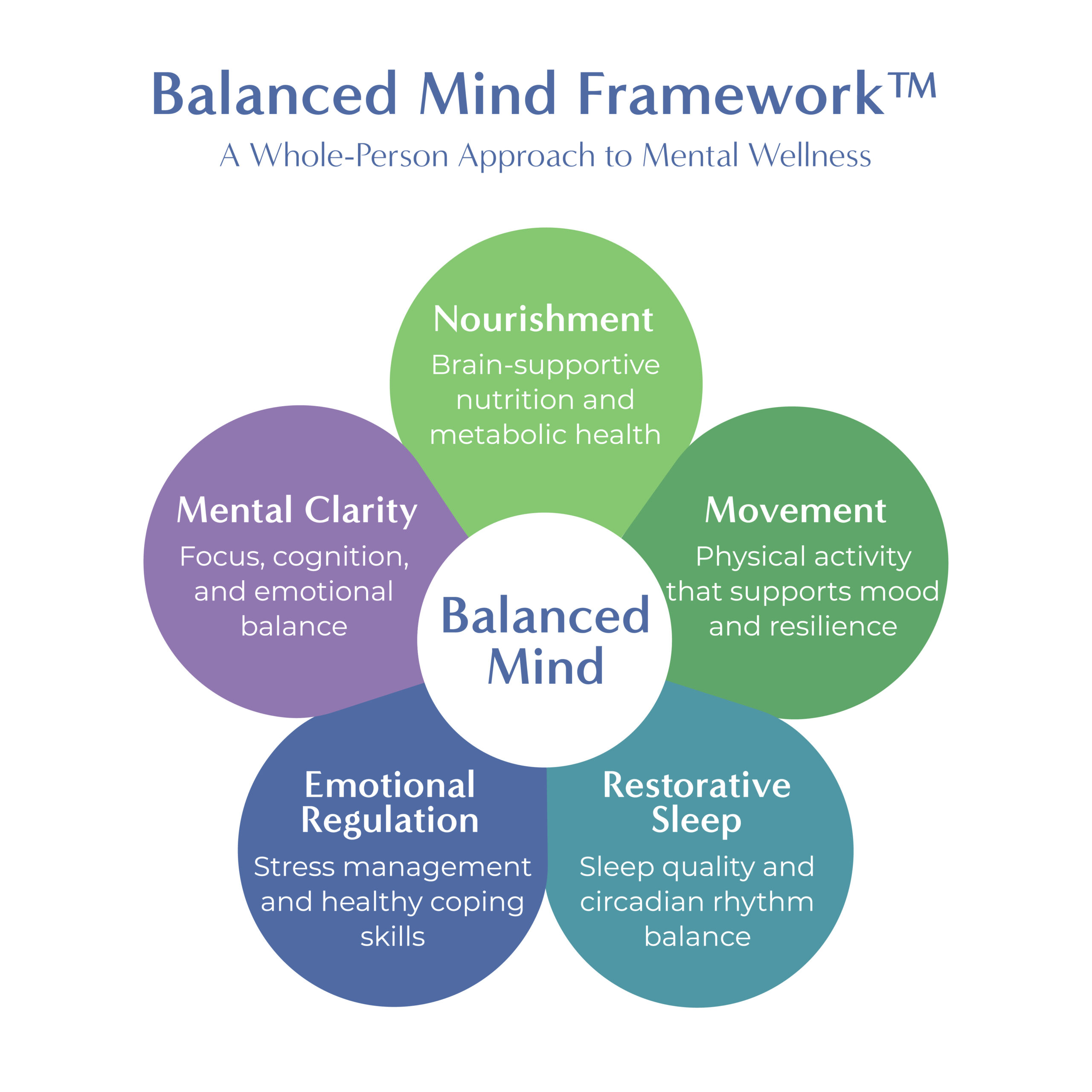
The Balanced Mind Framework™ guides care across five elements of mental wellness: nourishment, movement, restorative sleep, emotional regulation, and mental clarity. Each element plays a unique role in how we feel, think, and function. When one element is out of balance, others often follow. When they work together, mental wellness has the strongest foundation to thrive.
This framework is not a replacement for psychiatric care. It complements psychiatric care by supporting healing through both evidence-based treatment and everyday lifestyle choices.
The Five Elements
1. Nourishment
What we eat affects how we feel. Brain-supportive nutrition includes whole foods, healthy fats, lean proteins, and a variety of fruits and vegetables. Stable blood sugar, gut health, and balanced nutrients all play a role in mood, focus, and energy.
Try this: Add one brain-supportive food to your day this week, such as leafy greens, berries, nuts, or fatty fish.
2. Movement
Physical activity is one of the most powerful tools for mental wellness. Movement supports mood, lowers anxiety, improves sleep, and builds resilience. You do not need a gym or a long workout to benefit.
Try this: Take a 10-minute walk outside. Natural light and gentle movement together can lift your mood quickly.
3. Restorative Sleep
Sleep is when the brain repairs, organizes memories, and resets emotions. Poor sleep can worsen anxiety, depression, focus problems, and hormonal symptoms. Good sleep does the opposite.
Try this: Pick a consistent bedtime and wake time, even on weekends. A steady sleep rhythm strengthens mood and energy.
4. Emotional Regulation
Stress is part of life, but how we respond to it matters. Healthy coping skills help us pause, reflect, and respond rather than react. These skills can be learned and strengthened over time.
Try this: Practice slow breathing for one minute. Inhale for four counts, hold for four, exhale for six. This calms the nervous system quickly.
5. Mental Clarity
Mental clarity is the ability to focus, think clearly, and stay emotionally balanced. It is shaped by sleep, stress, hormones, nutrition, and even how much time we spend on screens.
Try this: Take a 5-minute screen break every hour. Let your eyes rest and your mind reset.
Why This Approach Matters
Mental wellness is shaped by many factors, including biology, life experiences, relationships, hormones, and daily habits. These factors look different for everyone, which is why a one-size-fits-all approach rarely works.
The Balanced Mind Framework™ supports the whole person, not just symptoms. By addressing all five elements together, it offers a more complete path to lasting mental wellness for people in every stage of life.
Putting It Into Practice
You do not need to change everything at once. Small, steady steps in any of the five elements can create meaningful improvements over time.
- Start small. Pick one element to focus on this week.
- Be patient. Lasting change takes time.
- Notice progress. Even small wins build momentum.
- Ask for support. Healing is easier when you are not alone.
Balanced Mind Mental Health: Your Partner in Care and Wellness
The Balanced Mind Framework™ is the heart of the care provided at Balanced Mind Mental Health. Through psychiatric evaluation, medication management, and lifestyle-informed strategies, care is tailored to each patient’s unique needs, goals, and life stage.
If you are ready to take the next step in your mental wellness journey, contact Balanced Mind Mental Health to learn more or get started.
Disclaimer: If you are experiencing a mental health crisis or thoughts of suicide or self-harm, call or text 988, call 911, or go to the nearest emergency room.
This information is for educational purposes only (regardless of date or topic), offering generalized details. It is NOT comprehensive and does not include all relevant information about conditions, treatments, medications, side effects, or risks for specific patients. It aims to aid understanding of mental health conditions or treatments, not to replace medical advice or the evaluation, diagnosis, or treatment provided by a healthcare provider tailored to an individual’s unique circumstances. Use of this website or blog content does not establish a provider-patient relationship with Balanced Mind Mental Health or its providers. Always consult a healthcare professional for a thorough evaluation, diagnosis, and treatment plan. This information does not endorse any treatment or medication as safe, effective, or approved. Balanced Mind Mental Health and its affiliates disclaim any warranty or liability associated with this information or its use.